A stop most people walk straight past
I've been doing this tour for eight years now, and the octagonal mausoleum is still the stop where I watch people's faces change the fastest. We're standing on an ordinary street, there's laundry hanging somewhere nearby, a cat usually sits on the wall, and then I point at what looks like a garden shed and say: that's Roman. That's actually Roman.
It's not in a museum. It's not roped off. It sits in what is, functionally, somebody's backyard, wedged between later buildings that grew up around it over centuries because nobody tore it down. That's the whole story of Pula in one sentence, really - people building around old stone instead of through it, because stone is expensive and this stone was already cut.
What an octagonal mausoleum actually is
Mausolea shaped like this - eight sides, central plan - were a real architectural category in the Roman world. Not a temple, not a tomb copied from a temple design, but its own thing, built specifically to hold and honor the dead. You see the family resemblance in bigger, grander domed structures elsewhere in the empire, but most octagonal mausolea were modest like this one. A private commission, probably. Somebody with enough money to build something permanent, and enough status to want it noticed.
I say probably a lot when I talk about this building, and I mean it. I don't know who commissioned it. I don't know exactly when it went up - and anyone who gives you a confident single-decade date for a structure like this without hedging is skipping past what the archaeology actually supports. What we have is a building type we can place, a form we can compare to other Roman funerary architecture, and a lot of gaps where names and dates used to be.
Why it survived at all
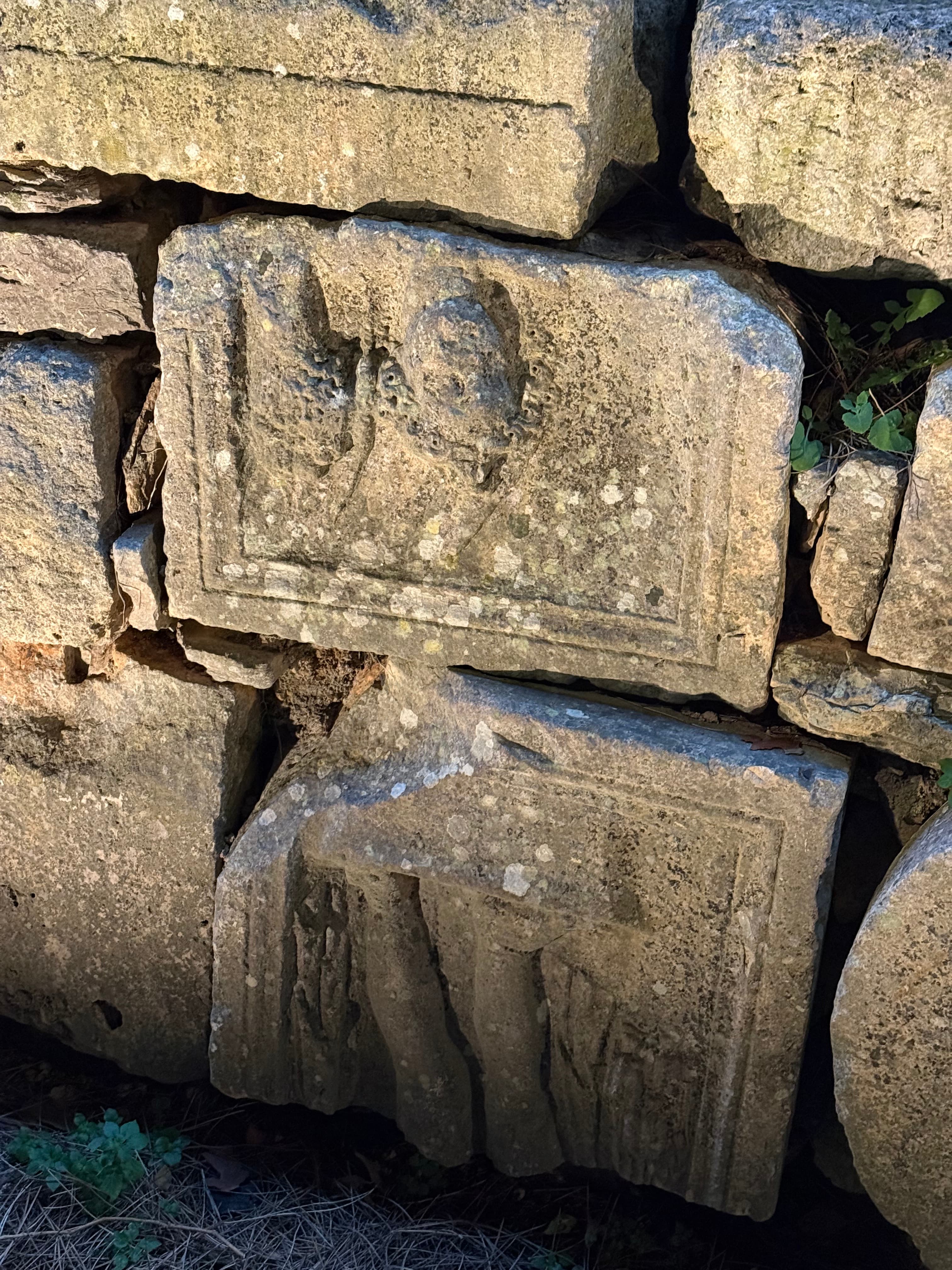
Here's the part I find genuinely moving, more than any plaque could make it. Most Roman funerary monuments outside the city walls got robbed for stone, or flattened, or built over so thoroughly that only a floor plan survives in an excavation report. This one didn't go anywhere. At some point it stopped being a mausoleum in anyone's mind and started being just a wall, a useful solid thing in a town that kept rebuilding itself on top of itself. Byzantine period, medieval period, whatever came after - somebody always needed a wall, and this one was already there, already thick, already Roman-built and not going anywhere.
That's not glamorous. It's also, I think, the most honest way to understand why a huge amount of ancient Pula is still standing at all. Not because people protected it out of reverence. Because reusing a wall is cheaper than demolishing one and starting over.
Finding it
I won't give you exact directions here, because the appeal of this stop, for me, has always been partly about walking it with someone and watching the moment of recognition happen in real time rather than reading it off a page. It's in the old town, close enough to the amphitheater and the forum that you'd assume everything nearby has already been flagged and fenced and signed. It hasn't. You can walk past it for years and think it's just an old garden wall with a weird shape, because from most angles that is exactly what it looks like.
On the tour I usually bring it up right after we've seen one of the big, obvious Roman monuments - the Arena, or the Temple of Augustus - specifically because the contrast does the work for me. Those buildings announce themselves. This one doesn't announce anything. You have to already know to look.
Why I still stop here after eight years
I could skip it. It's not going to be the thing anyone puts on a postcard. But it's become one of my favorite stops precisely because it resists the postcard version of history - the cleaned-up, dated, named, roped-off version where everything has a wall label. This building just has shape, material, and a few centuries of people deciding not to knock it down. Sometimes that's more honest than a sign with a date on it. I'd rather tell you what we actually know, and what we don't, than hand you a confident story that archaeology can't fully back up.
So if you're on the tour and we stop in front of what looks like somebody's garden wall, trust me for a second. It's older than it looks, and stranger than most of the buildings around it that actually look old.