A city that shrank to almost nothing
People ask me all the time how the Arena survived so well, and I used to give the short answer, good stone, good engineering, Romans built things to last. That's true but it's not the real reason. The real reason is Venice.
When Venice took control of Pula in the 1330s, the city was already in bad shape. Roman Pula had something like 25,000 to 30,000 people at its peak, a proper provincial capital with the Arena, the forum, temples, city walls, the works. By the time the Venetians showed up it had been shrinking for centuries, but under Venetian rule it got genuinely brutal. Malaria was the big killer. The whole area around Pula was swampy, mosquitoes everywhere, and there was no real understanding yet of what caused the disease. People just knew that if you lived down here you tended to get sick and die young. At the lowest point, some records from the 1600s put the population at a few hundred people. A few hundred. In a city built for tens of thousands.
Why Venice kept it anyway
So why didn't Venice just abandon the place? Because of the harbor. Pula has one of the best natural harbors on the Adriatic, deep and sheltered, and Venice cared about that a lot more than they cared about the people living around it. For most of these four and a half centuries Pula was basically a naval outpost and a source of stone and timber, not a city Venice invested in. They'd send officials down, a garrison, some administrators, and those guys mostly just wanted to survive their posting and get back to Venice. There's a reason being assigned to Pula was considered a punishment in Venetian bureaucratic circles. Nobody wanted the job.
The accidental preservation
Here's the part I actually find fascinating when I'm giving tours. All those empty centuries, all that decline, it's exactly why the Roman stuff is still here. Think about what usually destroys ancient buildings. It's not time, stone doesn't just crumble on its own that fast. It's people. People quarrying the stone for new buildings, people building houses inside and around old structures, cities growing and just paving over their own history layer by layer. That's what happened to most Roman cities that stayed populated and prosperous through the medieval period.
Pula didn't have that problem because there was nobody around to do any of it. When your population drops from 30,000 to a few hundred, you don't need new construction. You don't need to quarry the Arena for stone because you're not building anything. The temple on the forum, the Arch of the Sergii, the city gates, they just sat there for centuries with weeds growing through them and basically nobody paying attention. There actually was some stone-robbing over the centuries, a bit of the Arena's stone went into other buildings at various points, but compared to what happened in cities that stayed busy and growing, it's minor. The emptiness protected the place better than any law could have.
What Venetian Pula actually looked like
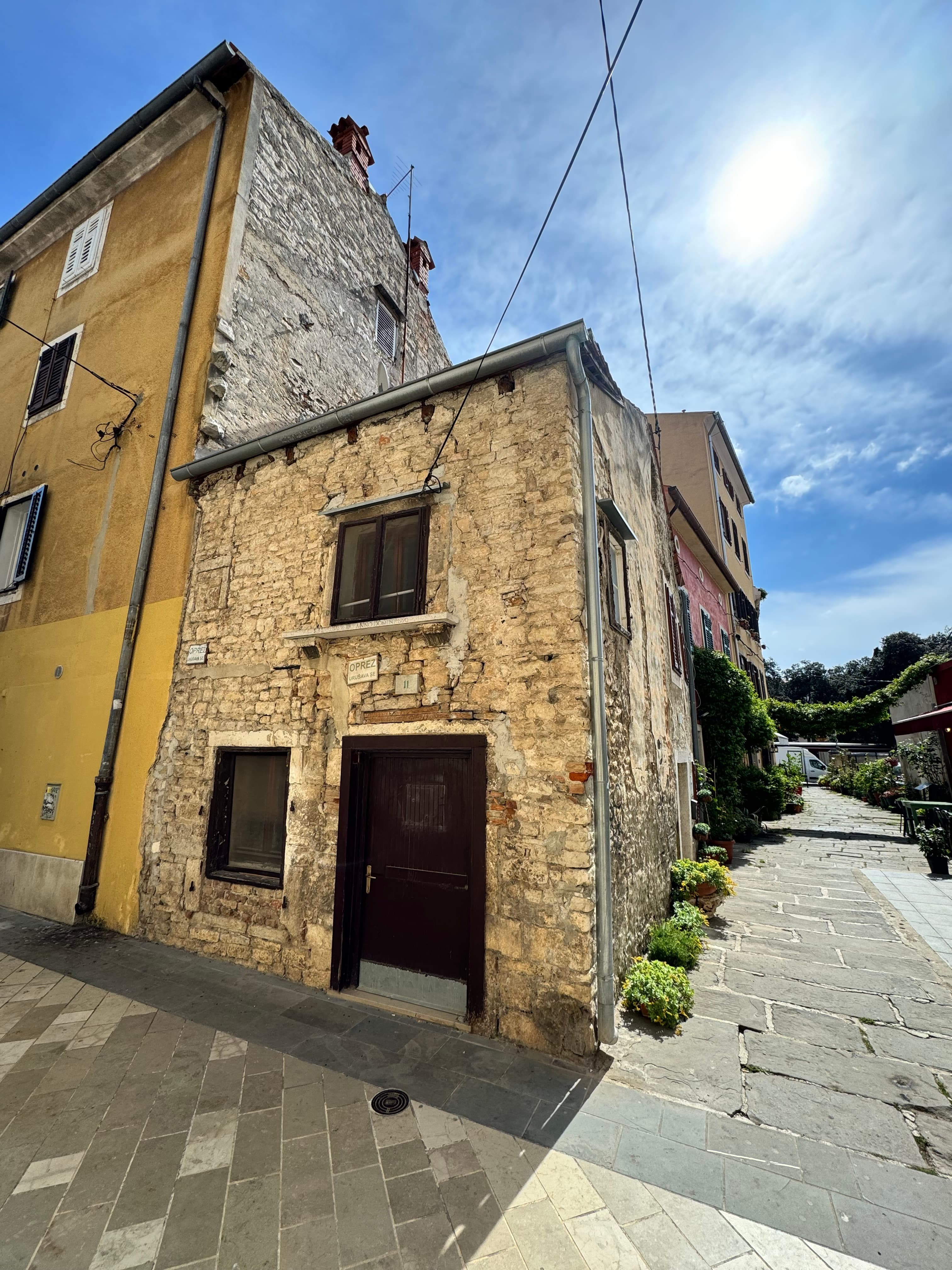
When I walk tourists through the old town now I try to get them to picture it. Not a bustling medieval trading city like you'd imagine in, say, Dubrovnik during the same period. More like a half-abandoned town with Roman ruins poking up everywhere, a small Venetian garrison, fishing families, and swampland pressing in close. The Venetians did build some things, there's Venetian-era architecture scattered through the old center if you know where to look, a few churches, some townhouses with those recognizable Venetian window arches. But it's thin. Nothing like the layered density you get in cities that had continuous prosperity.
Things only started turning around toward the very end of Venetian rule and then really took off after 1797, when the Austrians eventually made Pula their main naval base and the population exploded again. But that's a different story.
Why I bring this up on tours
I think people expect ancient ruins to be well preserved because someone protected them on purpose. Sometimes that's true. In Pula's case it's almost the opposite. Nobody protected the Arena because nobody was really here to either protect it or destroy it. It just got left alone by accident, for centuries, because the city around it had practically died. There's something almost funny about that when you sit with it. The worst period in Pula's history, economically and demographically, is the reason tourists like you get to walk into a nearly complete Roman amphitheater today. I always tell people, next time you're standing in the Arena, that eerie emptiness feeling you get from the Venetian era is basically part of why you're standing in something so intact.